How Does Peace Begin? Women Find the Answer Within Themselves Through Eight Weeks of Learning
2026.08.27
In Ulsan, South Korea, women spent eight weeks, from July to August, exploring these questions.
The Ulsan Branch of the International Women’s Peace Group (IWPG), led by Branch Manager Choi Mi-rae, launched the Women’s Peace Education (PLTE) program for its female members on July 21. Over the eight-week course, 15 women learned step by step about the concept and value of peace, conflict and war, peace movements, international law, and the role of women.
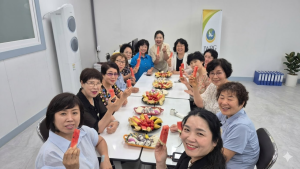
At the completion ceremony held at the Ulsan Branch office on August 20, participants looked back on the past eight weeks. They had initially gathered to learn about peace, but by the end of the program, they were discussing how they could practice peace in their everyday lives and share it with those around them.
The First Question Was Not “What Is Peace?” but “Who Am I?”
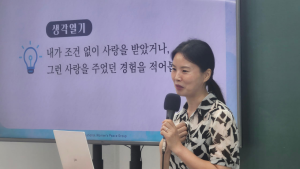
The first lesson focused on “Peace and Me.”
The program began with the question “What is peace?” Participants explored the meaning of inner and outer peace and reflected on how peace is connected to their own lives.
There was a clear reason for beginning the conversation about peace by looking inward. Recognizing who we are and acknowledging our own value can help us develop an attitude of respecting others.
Yoon Young-soon, one of the participants, said, “It was a valuable opportunity to recognize my own worth, and I learned that just as I am precious, other people are precious as well.” She added, “I want to spread peace by recognizing the value of others in my family and society.”
The participants also came to see that peace is not a distant issue. Kim Hye-soon said, “I used to think of peace simply as the absence of conflict, but I realized that it is a process of acknowledging our differences and communicating with one another.” She expressed her determination to practice peace in her everyday life.
From My Own “Peace Law” to a “Family Peace Law”
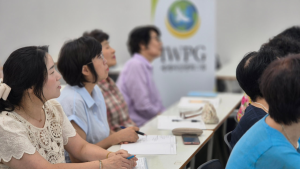
In the second and third lessons, the scope of peace expanded from the individual to the family.
Participants learned about what it means to be a citizen of peace and the qualities needed to become one. They also completed assignments to create their own “Peace Law” and a “Family Peace Law.”
They reflected on the principles of peace they wanted to uphold and the agreements their families needed in order to respect one another.
By creating their own rules for family life and turning them into something like a “law,” participants were able to move peace from an abstract concept into concrete actions.
As they shared the Family Peace Laws they had created, they discovered that even within the same family, people can have different ideas about which rules and values matter most. By listening to others and comparing their ideas with their own, they found lessons they could apply to their everyday lives.
Violence was also discussed. Participants reflected on how violence and peace are not necessarily distant concepts, but can ultimately emerge from the choices and actions people make. They considered what attitudes they themselves should choose in order to build peaceful relationships. One participant shared her determination to think positively and use kind words.
Looking Beyond the Family to Understand War
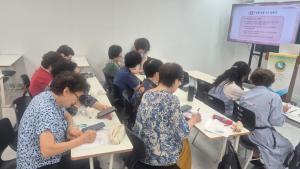
From the fourth week, the participants’ focus moved beyond their families.
They examined the causes and consequences of war, researched wars that had taken place across different regions of the world, and shared their thoughts with one another.
They also explored the reality that war is not simply an event found in history books, but something that can completely transform people’s lives.
The participants looked at factors such as the interests of nations and leaders, ambition, and conflict as causes of war. They also revisited the reality that when war breaks out, not only soldiers but countless civilians suffer its consequences.
The lessons also addressed how the wounds left by war can remain long after the fighting ends. Through this process, the meaning of peace expanded beyond simply being “the absence of war.” Participants began to view peace as understanding why wars occur, considering how conflicts can be prevented, and exploring what is needed to sustain peace.
Peace Movements Do Not Begin in Distant Places
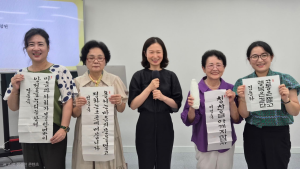
The fifth week focused on peace movements and efforts to end war.
Participants created their own quotes about peace and examined real-world examples of peace movements to understand how peace can be built in practice.
One example was the peace process in Mindanao, Philippines. By examining how a peace agreement was reached in a region that had experienced prolonged conflict and civil war, participants learned that dialogue and cooperation can create pathways to peace even in situations where conflict has become deeply entrenched.
Their understanding of the scope of peace movements also expanded. They came to see that peace movements are not activities reserved for special individuals. They can begin with participating in peace education, sharing what they have learned with people around them, and encouraging more people to take an interest in peace.
Oh Yeon-bun, an intern at the IWPG Ulsan Branch, said, “Peace is not something grand. It begins with the willingness to respect and understand one another.” She added, “I hope this education will serve as an opportunity to spread a culture of peace throughout the local community.”
Beyond “Good Relationships” to the Role of Institutions
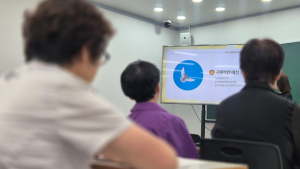
As the course entered its sixth and seventh weeks, the participants’ perspective expanded beyond individuals and local communities to the international community.
They learned that international law establishes common standards that individuals, societies, and nations are expected to uphold together. They also examined the limitations of the current international legal system and ways to address them.
In particular, participants studied the Declaration of Peace and Cessation of War (DPCW), an international legal framework intended to support peace, and discussed why such a framework is needed. This led them to consider how international conflicts that cannot be resolved through individual actions alone could be prevented and managed institutionally.
The participants also discussed how they could introduce peace education to more women rather than simply completing the course themselves. They identified recruiting new participants and raising awareness about the importance of peace education as roles they could take on, alongside following peace-related news and participating in peace events.
The importance of women working together was also emphasized. Participants learned that when individual acts of peace become connected and women’s solidarity expands into local and international communities, these efforts can develop into more sustained peace activities.
Eight Weeks of Learning Peace, Put into Practice in Everyday Life
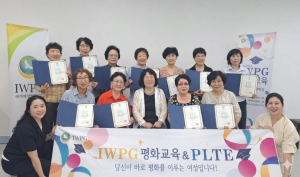
At the completion ceremony held after the eight-week program, participants received certificates of completion.
The most frequently discussed topic was not simply what they had learned in class. Instead, participants shared the small changes they had tried to make in their daily lives over the previous eight weeks and what they had experienced along the way.
In particular, they shared positive changes in their relationships with family members after practicing consideration and dialogue at home. It was an opportunity to see through one another’s experiences what the peace they had learned about could actually look like in everyday life.
Participant Park Bok-ja said, “Through this education, I discovered my own value and had the opportunity to think again about how precious I am.” She continued, “I believe peace is not something grand. Respecting and understanding one another is the first step toward practicing peace.”
She also pledged, “I will actively put what I learned through the education into practice in my everyday life, and I will recommend Women’s Peace Education to people around me because I believe it is an education that everyone should experience.”
Choi Mi-rae, Manager of the IWPG Ulsan Branch, said, “I hope Women’s Peace Education will give participants an opportunity to discover the value of peace and their own worth, and to practice peace in their families and local communities.” She added, “We will continue providing education and activities so that women can grow as agents of peace.”
The eight-week course officially concluded with the completion ceremony. But for the women who participated, putting the peace they learned into practice had only just begun.

Subscribe To Newsletter
We’d love to share everything we do with you. Sign up to stay informed.