IWPG Concludes the “2026 International Women’s Peace Conference”… “Women’s Everyday Actions Change Global Governance”
2026.09.30
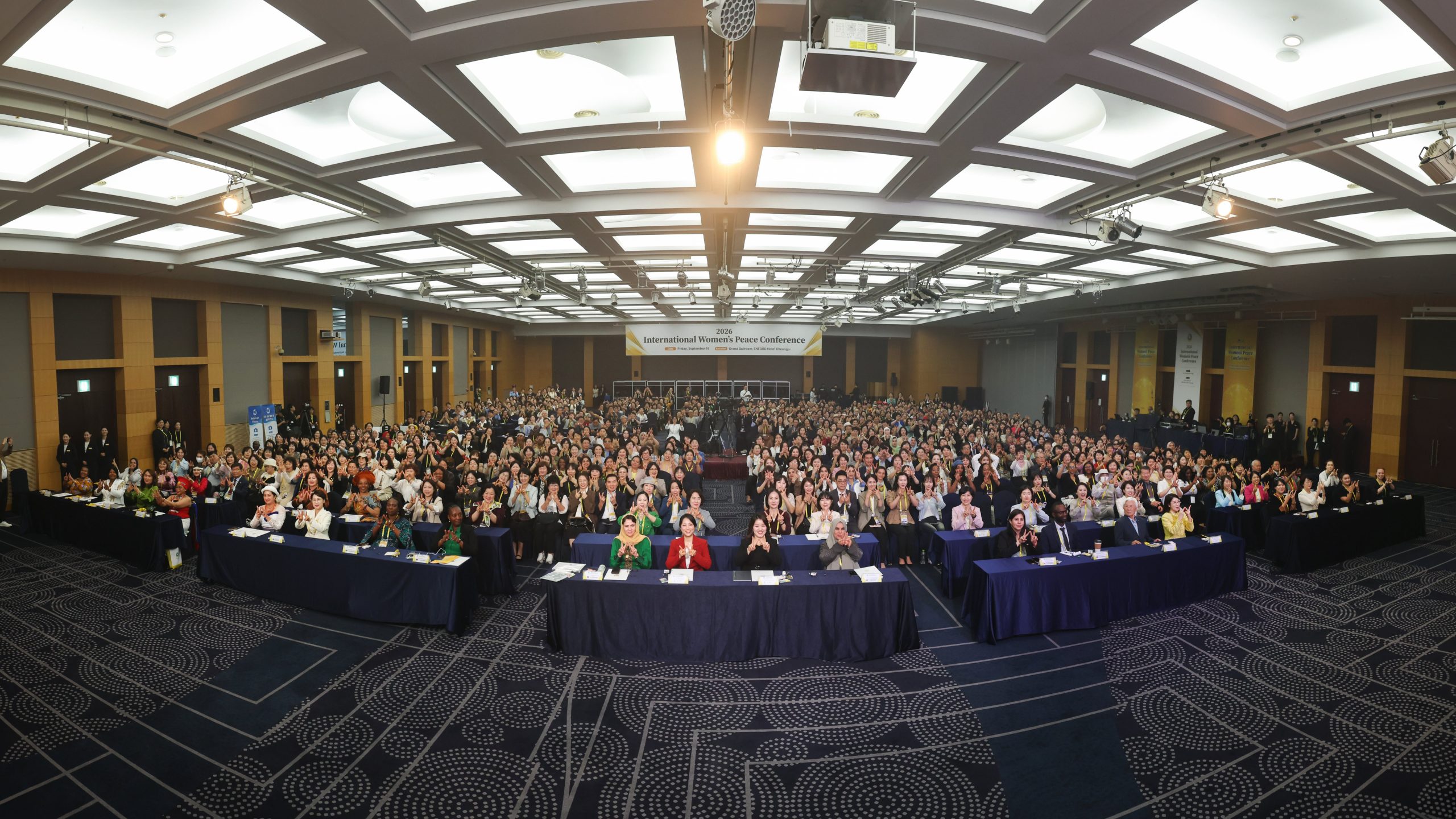
Participants pose for a commemorative photo during the main session of the 2026 International Women’s Peace Conference held on the 18th at the Enford Hotel in Cheongju, Korea. ⒸIWPG
Cheongju, Republic of Korea – The “2026 International Women’s Peace Conference,” hosted by the International Women’s Peace Group (IWPG; President Na-yeong Jeon), concluded its two-day official program on September 17–18 at the Enford Hotel in Cheongju, Korea.
Held under the theme “Peace in Everyday Life, Women’s Power: Shaping Global Governance,” the conference drew approximately 800 participants—including former and current ministers, local government leaders, diplomats, and officials from international organizations, as well as female civil society leaders, educators, and journalists from both Korea and abroad—who attended both in person and online. Participants discussed concrete implementation frameworks to institutionalize women’s experiences of practicing peace in their daily lives into public policy and norms of multilateral diplomacy.
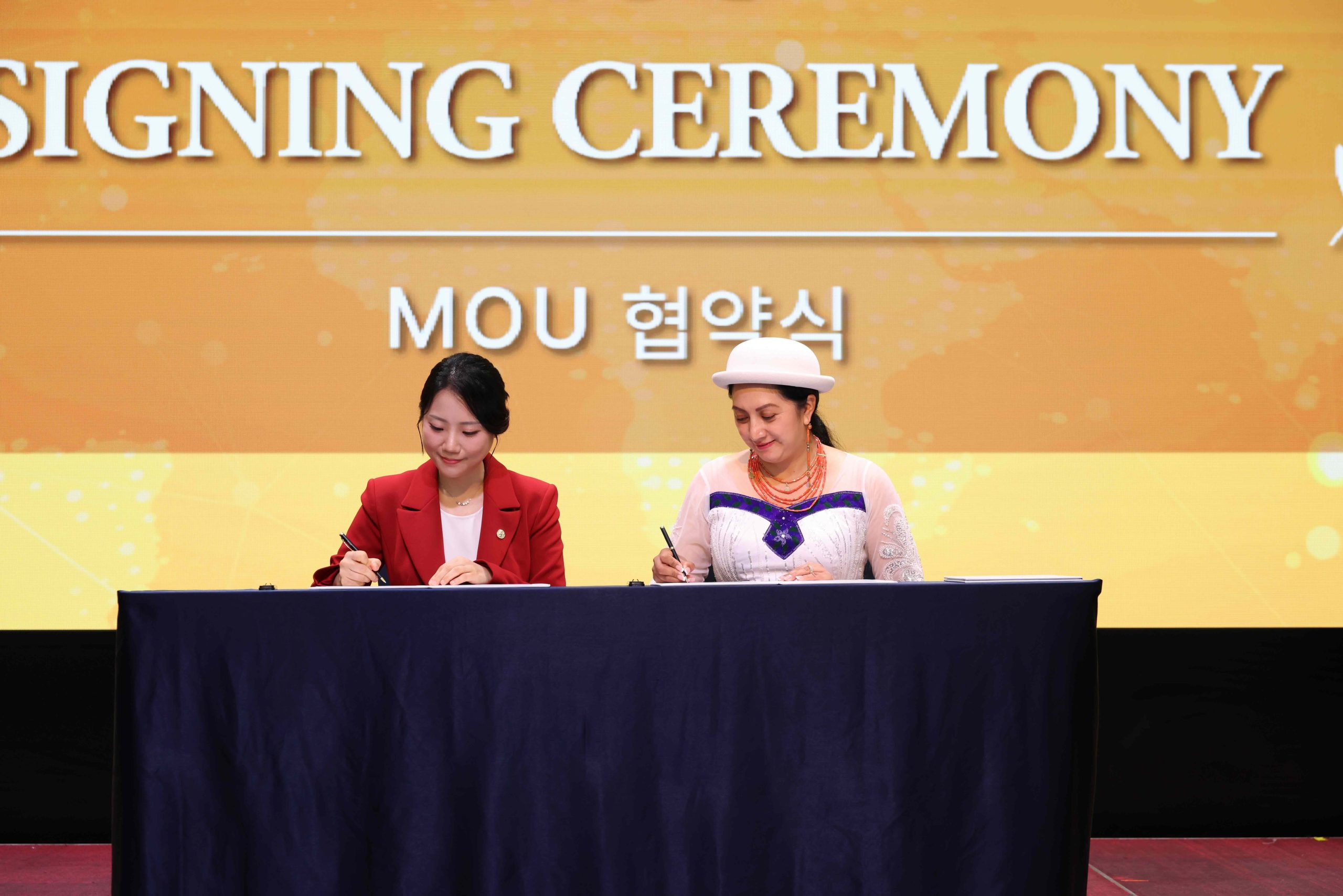
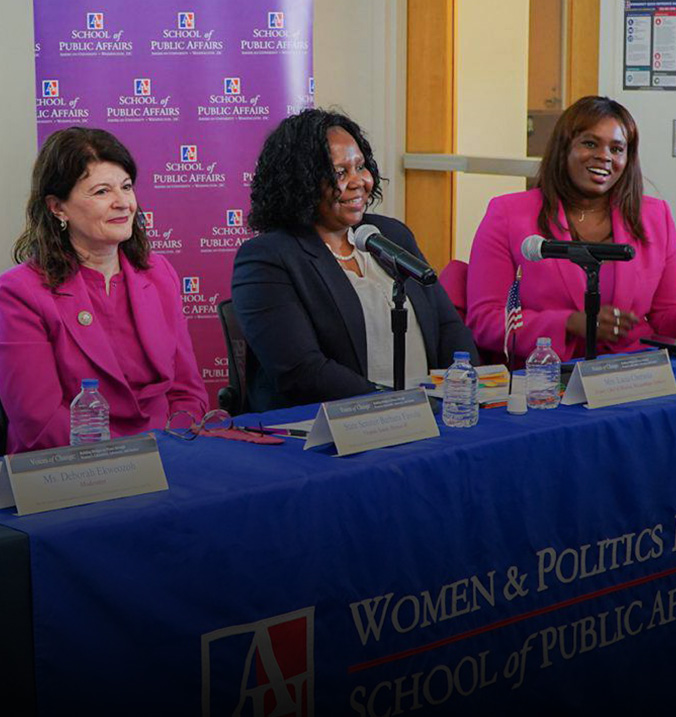
Na-yeong Jeon, President of IWPG, and Diana Caiza, Mayor of Ambato, Ecuador, are signing a Memorandum of Understanding (MOU) on peace cooperation. ⒸIWPG
MOUs Signed with 12 Institutions and Organizations from 8 Countries and “Global Recommendations” Adopted… Securing a Foundation for Policy Implementation
Going beyond mere discourse, this conference laid the groundwork for the practical implementation of peace governance by finalizing institutional agreements with public agencies and civil society organizations in various countries.
During this event, the IWPG officially signed Memorandums of Understanding (MOUs) with a total of 12 institutions and organizations from eight countries—including Ambato, Ecuador (Mayor Diana Caiza)—to promote peace and empower women. Through these agreements, the IWPG and local governments, educational institutions, and local civil society organizations in each country agreed to pursue sustainable collaborative projects, such as PLTE and region-specific peace initiatives.
In addition, the International Women’s Peace Conference officially announced the 2026 Global Women’s Peace Recommendations, which synthesized the views of approximately 1,070 female leaders from various fields across 46 countries worldwide last July. These recommendations include: ensuring women’s substantive decision-making authority; establishing an institutional safety net for everyday peace that encompasses medical, legal, and psychological support; PLTE for future generations and region-specific international solidarity. They are scheduled to be proposed as policy guidelines for the international community through major multilateral bodies such as the United Nations Commission on the Status of Women (CSW) and the African Union (AU).
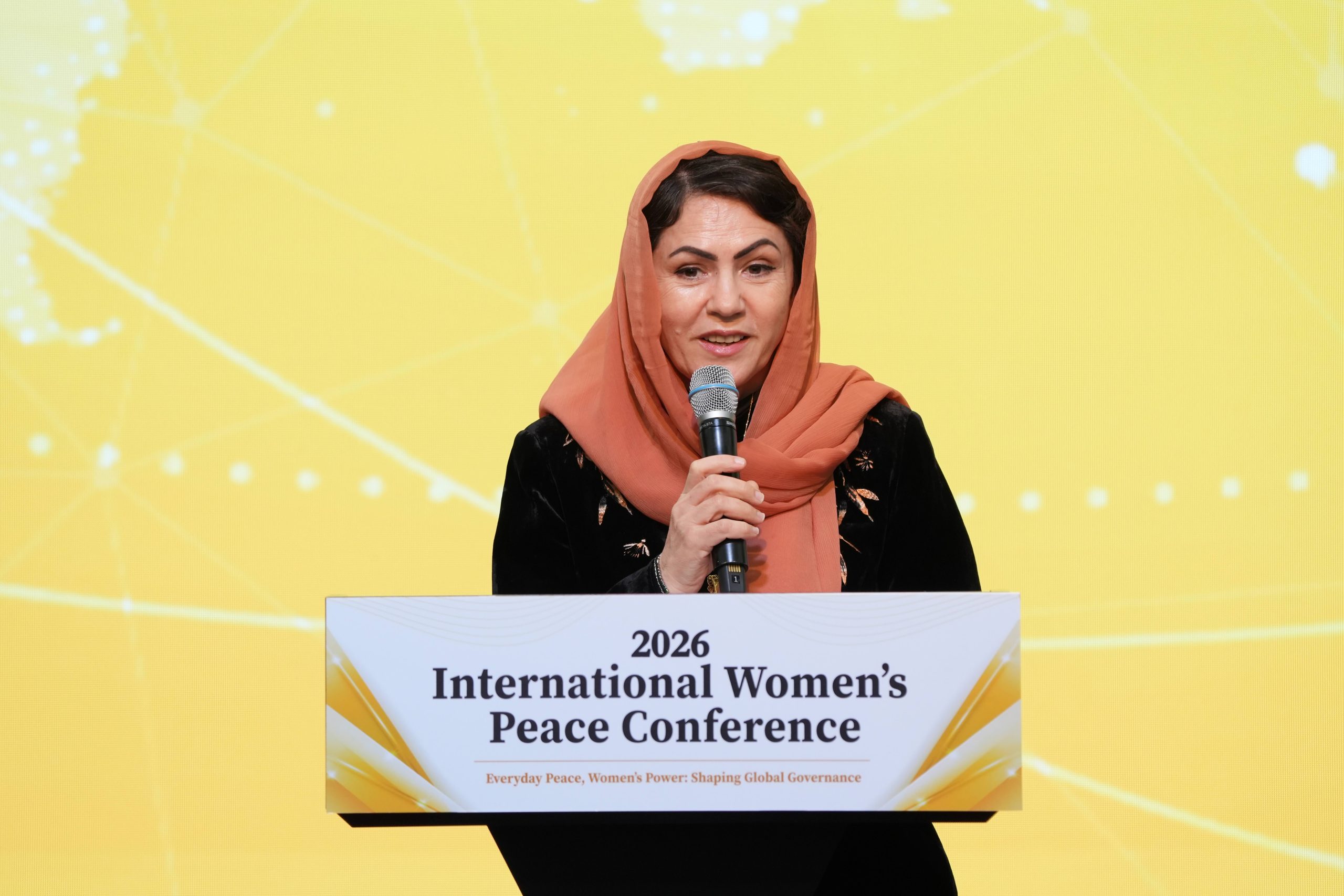
Fawzia Koofi, former Vice Speaker of the Afghan Parliament, speaks on the 18th on the topic of women’s resilience in conflict and peace in everyday life. ⒸIWPG
“Peace Without Participation Is Incomplete”… Policy Recommendations from Women Leaders on the Front Lines of Conflict
During the main session on the 18th, high-level female leaders who have been active on the front lines of conflict and social inequality shared in-depth testimonies and practical policy recommendations.
Fawzia Koofi, President of the Afghan Women’s Coalition and Afghanistan’s first female vice speaker of parliament (a 2020 Nobel Peace Prize nominee), stressed, “Passive peace—where the guns simply fall silent—is insufficient, and security that excludes women’s social and political participation cannot be sustained. Women should not be confined to the role of victims of conflict; they must be included as active participants at all official negotiating tables where national security, finance, and political systems are designed.”
Mayor Diana Guadalupe Caiza, the first Indigenous woman to serve as mayor in the 205-year history of Ambato, Ecuador, stated, “Women’s capabilities already exist; what is needed is education, safety, and opportunities to participate in fair policy-making,” and presented the achievements of local governance that combine care-centered local administration with the Andean philosophy of mutual aid (Ayni).
Ahed mohammed salem Gasos, Yemen’s Minister of Local Administration and State Minister for Women’s Policies, stated, “The actions of women who have safeguarded their communities’ livelihoods even amid the crisis of civil war constitute essential knowledge for reconstruction,” and called for the institutional empowerment of women throughout the entire process of post-conflict recovery governance.
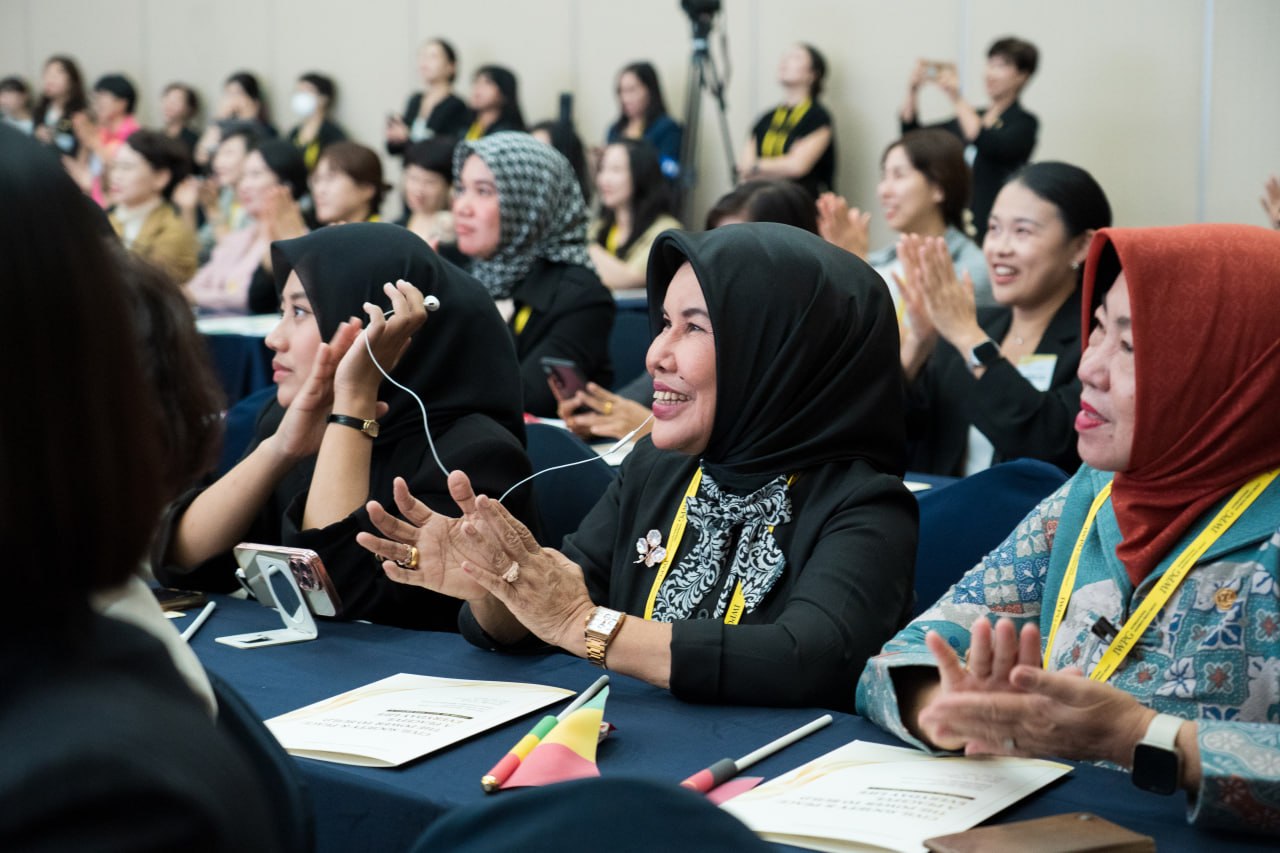 International participants attending the side event held on the 17th are listening to a presentation and applauding. ⒸIWPG
Strengthening Solidarity Among Governments, Universities, and Civil Society Organizations… Establishment of Academic Networks and Peace Chapters
This year’s International Women’s Peace Conference expanded its foundation as a platform for sharing the women’s peace agenda by collaborating with various partner organizations worldwide.
At the side event held on the 17th, the organization co-hosted four sessions in collaboration with the Multi-Party Women’s Caucus (MPWC) of the Gauteng Provincial Legislature, the Ambato City Hall in Ecuador, and the Mexican women’s rights organization Cemujer, focusing on the following themes: The AI Era and Peace; Peace Education and Women’s Leadership; Future Generations and Peace; Civil Society and Peace.
In addition, on the 18th, a new Academic Networking session was introduced to address the formalization of peace education in educational settings. Drawing on the example of the Autonomous University of Tabasco Juárez (UJAT) in Mexico—which established an on-campus Peace Committee and trained certified Peace Instructors (PLTE)—the session shared institutional cooperation strategies for embedding peace education within higher education and public education systems.
Furthermore, the IWPG announced that it would officially transform the Peace Committee, which it has operated for the past 10 years, into “Peace Chapters”—grassroots, self-sustaining organizations—and that the existing Peace Committee would be specialized as a policy advisory body comprising experts from various fields, thereby establishing a sustainable governance system.
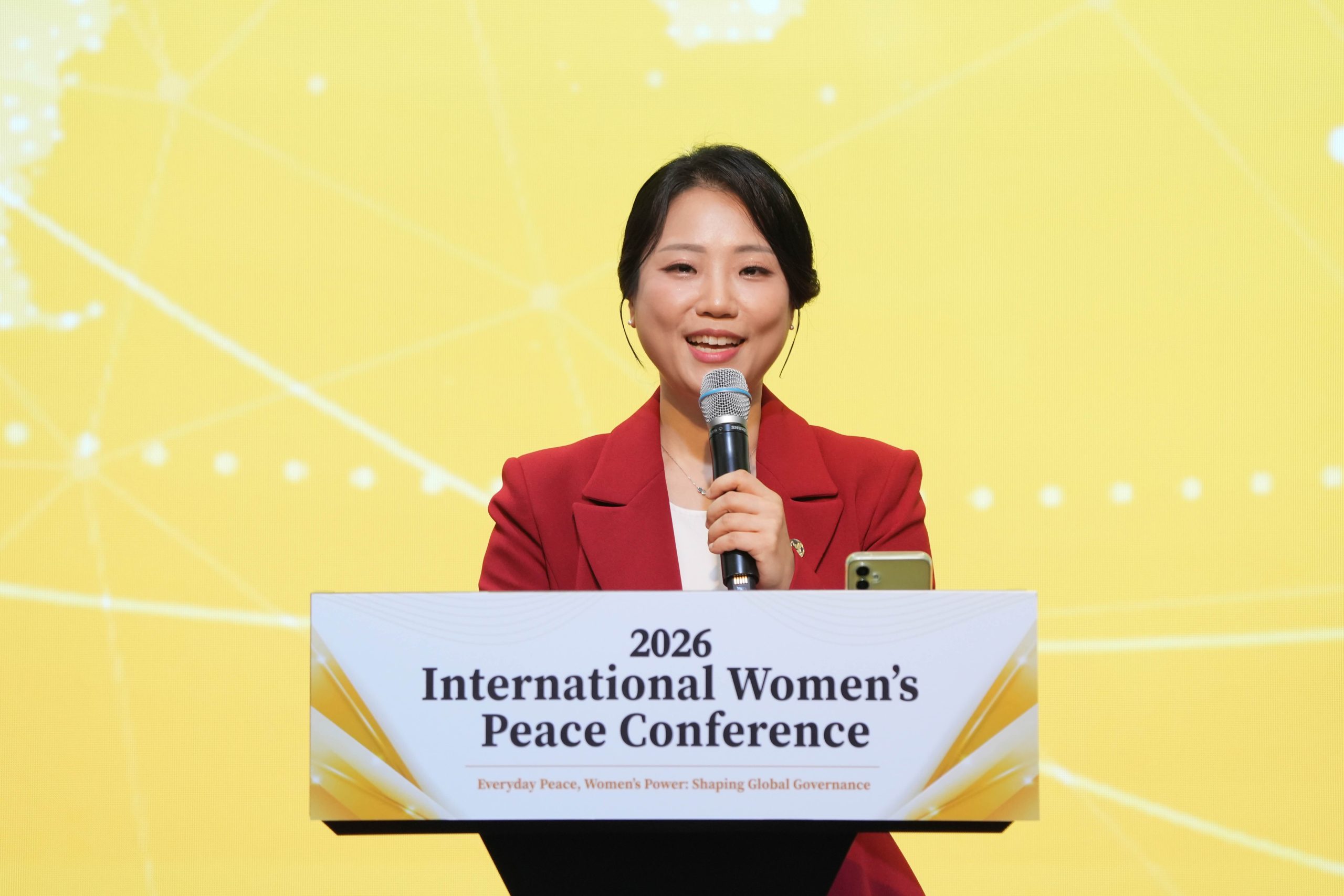
Na Yeong Jeon, President of IWPG, delivers a commemorative address at the 2026 International Women’s Peace Conference on the 18th. ⒸIWPG
President Na-yeong Jeon: “Women’s Everyday Experiences Are the Blueprint for Global Governance”
In her commemorative address, Na-yeong Jeon, President of IWPG, stated, “We often speak of peace in the context of negotiations between nations, meetings of international organizations, and major policies and institutions. Yet before peace reaches these spaces, it exists first in the everyday lives of people. Women’s experiences must be shared, their meaning understood, and their lessons transformed into our collective knowledge. And that knowledge must be able to inform policy, decision-making, and ultimately the discussions of the international community. I believe this is where the global governance we are discussing today begins.”
In her closing remarks, Choi Kyung-nam, Secretary-General of IWPG, emphasized that women’s experiences must lead to tangible institutional changes. “Our task is not simply to listen to women’s experiences, but to turn those experiences into knowledge, translate that knowledge into action, and connect that action to changes in society and institutions,” Secretary-General Choi said. “IWPG will continue connecting the experiences and voices of women around the world, supporting women’s peace leadership to grow within their communities, and working so that those voices can be reflected in broader policy discussions and within the international community.”
One international participant at the event said, “I formed deep bonds with women activists from around the world and gained steadfast allies in solidarity,” adding, “I came to deeply realize that even without grand slogans, women’s small daily actions and their very presence serve as a powerful starting point for peace.” She continued, “Upon returning to my home country, I will share the lessons and experiences I gained at this conference with my colleagues and apply them concretely in our local communities.”
Meanwhile, IWPG is an international women’s peace NGO headquartered in South Korea and registered with the United Nations Economic and Social Council (ECOSOC) and the Department of Global Communications (DGC). Together with 105 branches and approximately 900 partner organizations worldwide, it carries out activities such as PLTE, the promotion of a culture of peace, and the proposal of women’s peace policies.

Subscribe To Newsletter
We’d love to share everything we do with you. Sign up to stay informed.