Learning Inner Peace Through Breathing and Hand Gestures: Peace Class Held in Chennai, India
2026.09.29
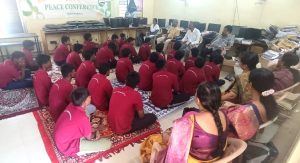
Small practices, such as focusing on one’s breathing and understanding one’s emotions, can be a starting point for learning about peace.
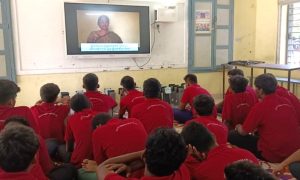
On September 29, the Chennai Peace Committee, led by Global Region 3 of the International Women’s Peace Group (IWPG) and the Sanju Women’s Welfare Association (SWWA), held a peace class on “Peace Within and Emotional Well-being” for around 30 students at CSI St. Thomas Higher Secondary School in Chennai, India.
The program aimed to help students understand that peace begins within each individual through meditation and activities focused on emotional well-being. It was led by Kannaki Prabhakaran, school principal of AIWC and a member of the Chennai Peace Committee, and Venkatasubramani, a regional coordinator for Anapana Meditation.
The session began with Anapana Meditation, a practice that focuses on breathing. Students learned how observing their own breath can help calm the mind. They also discussed ways to understand their emotions in everyday life and respond more calmly in challenging situations.
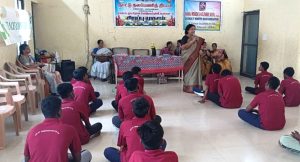
The program continued with a hands-on session on ‘mudras’, traditional hand gestures. Students practiced Mushti Mudra to help manage anger, Prithvi Mudra to support emotional stability and manage fear, Anjali Mudra to promote relaxation, Prana Mudra to encourage energy and vitality, and Hakini Mudra to support memory and concentration.
Students who had initially listened quietly became more actively involved as the practical session began, following the movements themselves. Rather than simply explaining the meaning of peace, the program encouraged students to reflect on their own physical and emotional states through direct participation.
Kannaki Prabhakaran, a member of the Chennai Peace Committee, said, “At first, the students were rather quiet and mainly listened to the presentation. However, they gradually became more attentive and interested as we discussed how peace is connected to education, employment, freedom from hunger and poverty, and a better quality of life.”
She added, “When we introduced simple mudra practices for emotional and physical well-being, the students began practicing them themselves and showed greater curiosity. It was meaningful to see them understand that peace begins within us, and that emotional well-being, good education, positive thinking, and healthy habits can contribute to a peaceful and happy life.”
The peace class gave students an opportunity to reflect on the meaning of peace in their daily lives and become more aware of their emotions and reactions. Through meditation and hands-on activities, the Chennai Peace Committee created a space for students to explore how inner peace can be learned and practiced.

Subscribe To Newsletter
We’d love to share everything we do with you. Sign up to stay informed.