81 Years After Korea’s Liberation: Remembering History, Building Peace
2026.08.28
On August 15, 1945, Korea was liberated from 35 years of Japanese colonial rule and regained its sovereignty. The day marked the end of Japan’s colonial rule, which had lasted from 1910 to 1945, and became a defining moment in modern Korean history. Korea commemorates this day every year as Gwangbokjeol, or National Liberation Day.
The Korean word “Gwangbok” means “the restoration of light,” symbolizing the recovery of Korea’s national sovereignty. Streets are filled with the Korean flag, the Taegeukgi, and people reflect on the joy of liberation. Yet the day is more than a commemoration of a historical moment. It is also an opportunity to remember the sacrifices made for freedom and independence and to consider what those sacrifices mean for generations today.
And in August 2026, people across Korea once again brought those memories to the present.
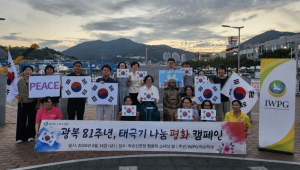
The 27 International Women’s Peace Group (IWPG) branches across Korea carried out a variety of activities throughout August to mark the 81st anniversary of Korea’s Liberation Day. These included Taegeukgi-sharing campaigns, history lectures, community activities, and peace network gatherings.
The activities looked different in each region. Some members went into the streets to hand Taegeukgi flags to citizens, while others explored the lives of women who fought for Korea’s independence. Some visited elderly residents to share memories of liberation, while others left their handprints or wrote personal messages about peace.
Rather than remembering liberation simply as a chapter of the past, the activities invited people to consider how the memory of that history can be connected to the question of how we build a more peaceful society today.
Taegeukgi Flags in the Streets, and Citizens’ Promises for Peace
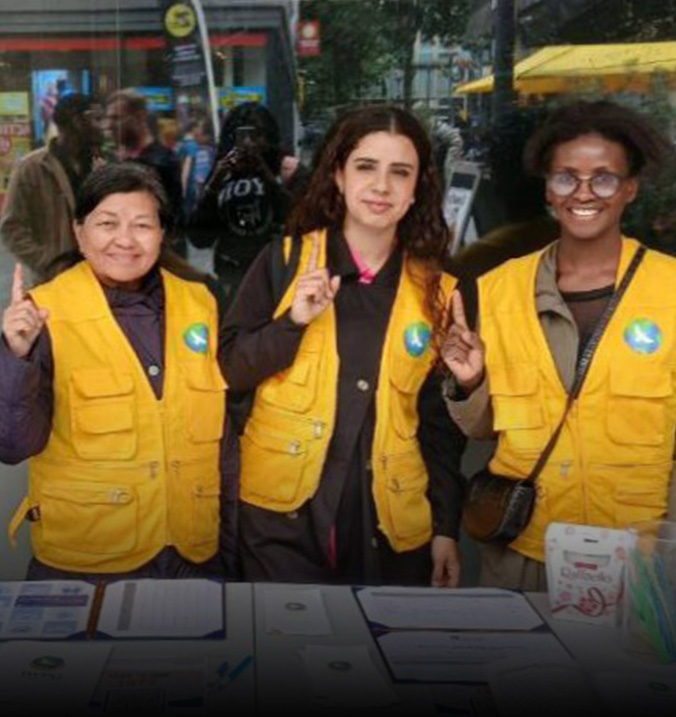
On August 14, IWPG’s Gunsan Branch joined the Gunsan Branch of the Korean Veterans Association for a Liberation Day Taegeukgi-sharing event.
The members handed Taegeukgi flags and Liberation Day stickers to citizens, encouraging them to reflect on the meaning of liberation and the sacrifices made by those who gave their lives for Korea.
The activity went beyond simply handing out flags. Members spoke with citizens, shared the values of patriotism and peace, and discussed ways to work together to promote a culture of peace within the local community.
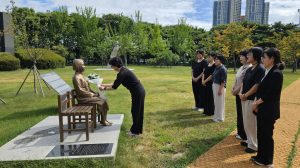
The same day, IWPG’s Yeosu Branch also marked Liberation Day with local citizens.
In front of the Statue of Peace Girl at Lee Sun-sin Square in Yeosu, members handed out Taegeukgi flags and invited citizens to write messages on cards titled “My Promise for Peace.” Participants wrote down their own thoughts and placed the cards on a peace pledge board.
Some citizens received a Taegeukgi, while others left behind their own words about peace. A cultural interpreter also introduced the historical significance of the Statue of Peace Girl, providing an opportunity to connect Korea’s difficult past with the importance of remembering history and pursuing peace today.
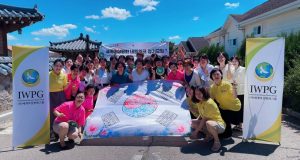
The Meaning of “Together” in a Single Handprint
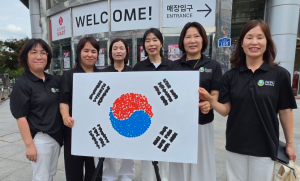
At Daechuri Peace Village in Pyeongtaek, Gyeonggi Province, about 40 citizens came together to create a large Taegeukgi using their handprints.
The flag could not be completed by one person alone. Each individual handprint became part of a larger image, creating a simple but visible reminder of what can be accomplished when people participate together.
The activity also offered an opportunity to think about peace in a similar way. Peace cannot be created through the efforts of one person alone. It requires people with different experiences and perspectives to work together toward a common goal.
On August 18, IWPG’s Paju Branch visited the Sarakhalin Korean Association Senior Center in Seonyu-ri, Munsan-eup, and held a gathering where participants reflected on the meaning of liberation and the spirit of honoring those who protected the country.
For younger generations, meeting people who lived through the aftermath of Korea’s history offered a different way of encountering the past—not only through books or historical records, but through the memories and experiences of people.
The gathering reminded participants that Korea’s liberation is not simply a line in a history textbook. It is also part of the personal memories and lives of people in their communities.
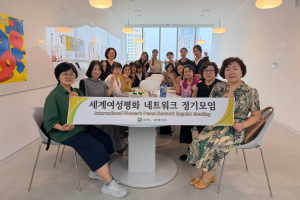
Looking Again at Yu Gwan-sun Through the Eyes of Women Today
The lives of women independence activists also provided an opportunity to reflect on the present.
IWPG’s Nowon Branch held a movie day as part of its August International Women’s Peace Network Regular Meeting, focusing on Yu Gwan-sun, one of Korea’s best-known young independence activists.
Participants watched and discussed her life and her involvement in Korea’s independence movement, considering what her actions might mean to people living in Korea today.
They also discussed what the current generation can learn from those who came before them and what kind of example they should leave for the generations that follow.
One generation’s choices can become a reference point for the next. In the same way, the choices people make today may become part of the history remembered by future generations.
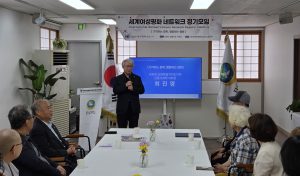
Different Regions, One Common Direction
In Chuncheon, Gangwon Province, participants explored the historical significance of the Battle of Chuncheon and reflected on the values of protecting one’s country.
In Gangneung, they revisited the history of the Nammun Market independence demonstration in 1919.
In Donghae and Samcheok, participants discussed the role of citizens in promoting peace and reunification on the Korean Peninsula and considered practical ways to contribute within their communities.
In Mokpo, South Jeolla Province, participants attended a Liberation Day celebration concert and strengthened their peace network with local community leaders.
The locations and activities were different, but they shared a common purpose: connecting the memory of Korea’s liberation with the pursuit of peace today.
Remembering why people fought for freedom and independence also means asking what kind of society they hoped future generations would inherit.
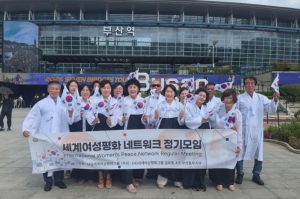
81 Years Later, Bringing History Back to the Present
Eighty-one years have passed since Korea’s liberation.
As time passes, fewer people who personally remember the period surrounding liberation remain. For this reason, remembering Liberation Day has become not only an act of looking back, but also a way for younger generations to understand the value of freedom and the responsibilities that come with it.
Today, Liberation Day invites people to look beyond the historical event itself and consider how the memory of the past can shape the society we build today.
The activities carried out by IWPG branches across Korea this August followed that same direction. By revisiting historical figures and events and engaging directly with citizens, the activities provided opportunities to consider liberation not simply as a story from a distant era, but as part of an ongoing conversation about what kind of society we want to create.
August 2026 marked the 81st anniversary of the liberation of Korea. The ways people remembered that day were different from region to region, but the significance of remembering the sacrifices of the past remains relevant today.
History is preserved not only by remembering what happened, but also by considering what we can learn from it. For the people who took part in IWPG’s Liberation Day activities, remembering Korea’s journey to freedom became an opportunity to reflect on the kind of peace they hope to pass on to the next generation.

Subscribe To Newsletter
We’d love to share everything we do with you. Sign up to stay informed.