[IWPC 2026②] Women Leaders Explore Ways to Advance Peace Policies and Global Governance
2026.09.17
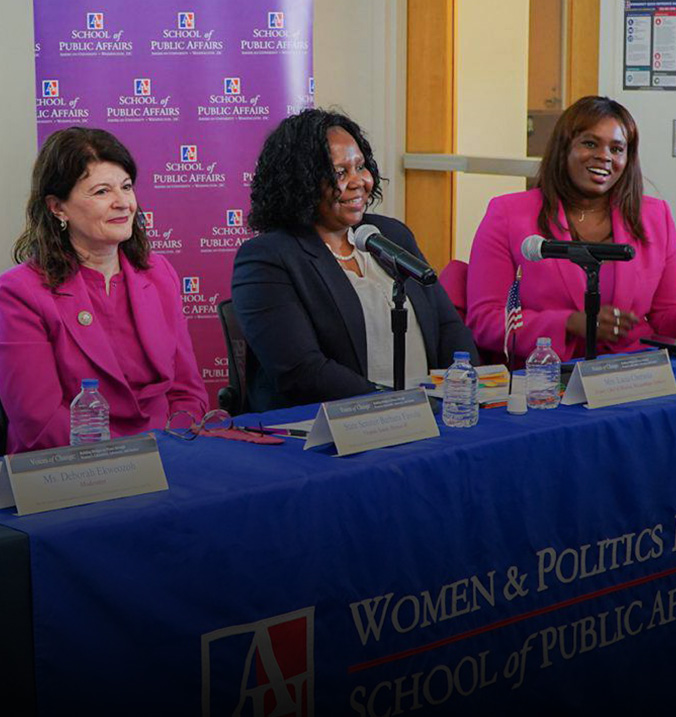
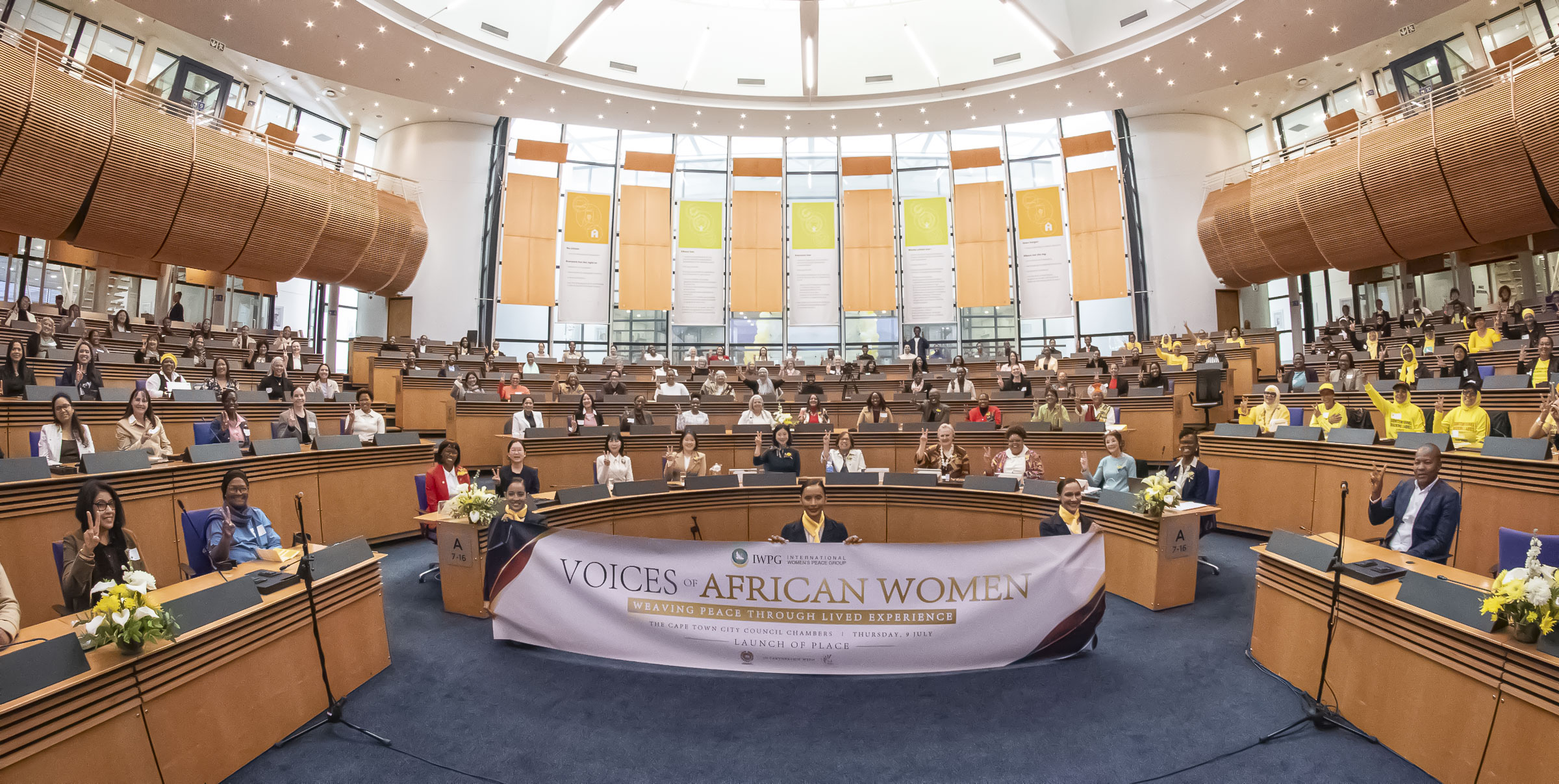
On the morning of September 17, women leaders, government officials, scholars, and civil society activists from 31 countries gathered in Cheongju.
The Opening Session was moderated by Fortunate Murowashenkage, Cape Town Branch Manager.
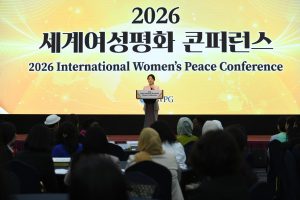
In her welcoming address, Jeon Na-yeong, President of IWPG, introduced this year’s conference theme, “Everyday Peace, Women’s Power: Designing Global Governance.”
“While peace is discussed at international conferences and negotiation tables, the true beginning of peace ultimately lies in our everyday lives,” she said.
She emphasized that the choices people make when facing conflict, the way they listen to different perspectives, and the way they reach out to those in need all contribute to shaping the communities in which they live.
She also highlighted how women have practiced peace throughout their lives by protecting families and communities, mediating conflicts, and engaging in education, caregiving, and community activities.
“I firmly believe that the essential answers to peace reside precisely within that everyday life,” she said.
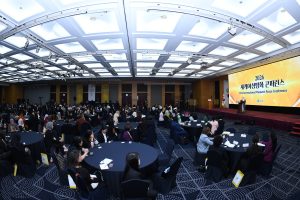
Following her address, Dr. Ahad Mohammed Salem Gaasos, Minister of State for Women’s Affairs of Yemen; representatives from the Embassy of the Republic of Kenya in the Republic of Korea; and Ing. Diana Caiza, Mayor of Ambato and the first indigenous female mayor in the city’s history, took the stage.
The international guests addressed issues of conflict and marginalization, emphasizing the importance of women’s participation in policymaking and international cooperation.
In the afternoon, four concurrent Side Events took place.
Participants joined sessions focusing on AI and peace, peace education and women’s leadership, future generations and peace, and civil society and peace.
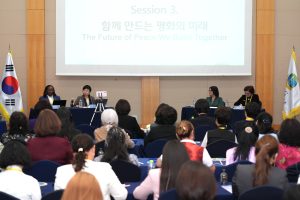
🤖 Peace in the AI Era: Who Is Technology For?
The AI session, organized and hosted by Global Regions 7, 8, and 9, focused on inclusive women’s leadership and the need to safeguard human dignity and ethics amid rapid technological change.
Delivering the keynote address, Shura Nasandulam, former Chair of the Bulgan Aimag Citizen Representative Council in Mongolia, discussed the new definition and direction of peace in the age of AI.
Madrine Bbalo Mbuta, Director of Policy, Planning, and Information at the Ministry of Community Development and Social Services of Zambia, addressed data inequality surrounding AI and international peace.
Choi Yeong, Representative of Dadok AI Institute in South Korea, discussed the risks of cyber deepfakes and human-centered AI ethics. Shirete Sulimani, Special Envoy to the President of Kosovo and Advisor to the International Rehabilitation Council for Torture Victims (IRCT), spoke about women’s participation in decision-making processes and inclusive leadership.
Dashzeveg Oyunbileg, Foreign Relations and International Cooperation Advisor to the former Governor of Bulgan Aimag, Mongolia, shared insights into the kind of inclusive AI envisioned by future generations.
The discussion focused on risks including data gaps, disinformation, and deepfakes as technology becomes increasingly integrated into society. Participants also discussed how the voices of women and diverse communities can be reflected in governance processes.
The session also featured an interactive performance using QR codes. Peace messages written by participants appeared on a large digital screen, followed by a ceremony in which attendees placed daisy flower bracelets on one another’s wrists under the theme “Hope Blooming on the Wrist.”
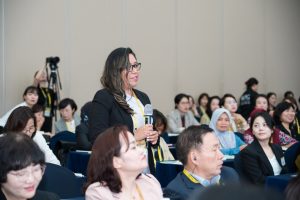
📚 Peace Education Extending to Schools and Communities
The Peace Education session, jointly prepared by Global Regions 2, 4, and 12, presented institutional frameworks for Peace Leadership Training for Women (PLTE) and regional implementation cases.
Simone Yankey, Senior Policy Officer at the African Union (AU-CIEFFA), delivered the keynote address on peace education and women’s leadership for sustainable peace.
Erika Janet Valdivieso López, Vice Minister of Women and Vulnerable Populations of Peru, introduced institutional foundations for public policy and women’s empowerment. Francisca Moto Young, Director of Women’s Social Empowerment of Cameroon, shared Cameroon’s experience of linking education with social participation and leadership.
Dr. Vinutthaput Phophet, Professor at Shinawatra University in Thailand, discussed the role of education in strengthening women’s capabilities. Daniel Mutegi Giti, CEO of the National Cohesion and Integration Commission (NCIC) of Kenya, addressed strategies for institutionalizing peace education and conflict prevention.
María Paula Prada Ramírez, 2026 Yale Peace Fellow and Independent Strategic Advisor from Colombia, shared Colombia’s experiences with women’s leadership and peacebuilding. Shegofa Naseri, Vice President of Sunrise Community in Australia, and Mujgan Tahery, CEO of Uniting Circle Multicultural Community Center in Australia, presented on community-based peace education, leadership, and social cohesion.
The IWPG San Francisco Branch shared a practical case in which peace education led to action. Walter Nyaga Maina, Research and Knowledge Management Officer at the Office of the Special Envoy on Women, Peace and Security (OSE-WPS) of the African Union, delivered a synthesis of the presentations through the lens of Women, Peace, and Security (WPS).
🪑 The “Empty Chair”: Reserving a Place for Future Generations
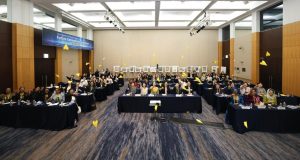
In the Future Generations session, co-hosted by Global Regions 3, 5, and 6 and the Multi-Party Women’s Caucus (MPWC) of the Gauteng Provincial Legislature in South Africa, an empty chair was placed at the center of the venue.
The chair symbolized children of future generations who were unable to attend because of conflict, violence, and social inequality.
Fawzia Koofi, former 2nd Deputy Speaker of the Afghan Parliament and President of the Afghan Women’s Coalition, discussed designing peace starting from the first 1,000 days of life.
Mishal Adina, Director of the Women’s Development Department at the Pak Christian Foundation in Pakistan, introduced perspectives on peace as envisioned by future generations.
Prof. Erinma Bell, Chair of the Manchester Peace Committee in the UK, presented on community peace education extending from the streets to schools, while Newman Anesly, Head of Operations at BBCE International University in Sri Lanka, spoke on women-led support and positive masculinity for peace.
Hon. Dr. Nomathemba Mokgethi, Member of the Gauteng Provincial Legislature and Chair of the MPWC Multi-Party Women’s Caucus in South Africa, introduced parliamentary peace policies and legislative agendas for future generations.
Drawing from their field experiences, the speakers examined what environments educational institutions, local communities, and governments must create for future generations.
Following the presentations, participants wrote promises and hopes for future generations on yellow paper airplanes. The session concluded with a joint ceremony in which attendees flew the paper airplanes together.
🌐 Grassroots Civil Society Building Peace on the Ground
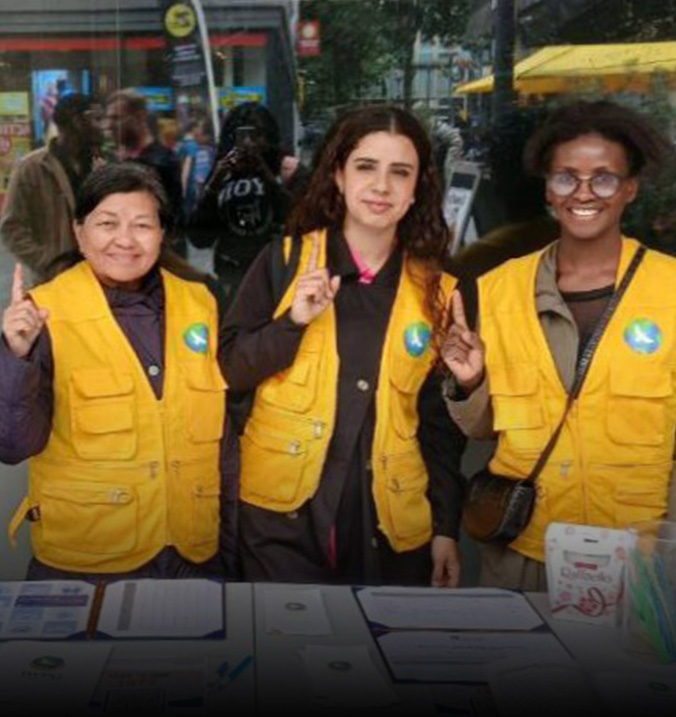
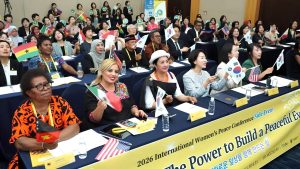
The Civil Society session, jointly organized by Global Regions 1, 10, and 11, showcased the work of a global network building everyday peace at the grassroots level. Around 100 women leaders from eight countries—including the United States, Mexico, the Philippines, Ecuador, Ghana, Indonesia, Papua New Guinea, and South Korea—attended the session.
Delivering her keynote speech via video, Hon. Maria Therasa Timbol, President of the Kapalong Municipal Women’s Council in the Philippines, stated, “The journey toward peace does not end with an agreement; it begins with an agreement.”
She shared Kapalong’s experience of translating peace into concrete policies and actions through local government-civil society collaboration, highlighting youth peace education, domestic violence prevention, and housing support.
During the panel discussion, civil society leaders examined the roles of women and civil society based on their experiences in the field.
Rosario Viridiana Román Carrillo, Representative of CEMUJER in Mexico, emphasized the importance of education for women’s independence and community networking, noting, “Violence prevention begins long before violence occurs.”
Nana Bruce (Millicent Bruce), Board Member of Energy Quest Foundation in Ghana, quoted Dr. Martin Luther King Jr., saying, “Peace is not merely the absence of tension; it is the presence of justice.” She stressed the need to reduce exclusion and expand the meaningful participation of women and youth in decision-making.
Dr. Regina Palmer-Coleman, an attorney and law firm president in the United States, remarked, “Meaningful change begins with ordinary people and grassroots communities determined not to tolerate division and injustice,” emphasizing the importance of voice, solidarity, and accountability in driving change.
Lilly Kolts Besoer, Representative of Voice for Change in Papua New Guinea, shared experiences in community conflict resolution and solidarity. Ros Ermawati, a vocational education practitioner at Quantum Polytechnic in Indonesia, spoke on the role of vocational training and civic solidarity. Riswati, Executive Director of Flower Aceh in Indonesia, shared insights on sustainable capacity building for grassroots civil society.
The session highlighted examples of civil society organizations across countries expanding the participation of women and youth while addressing conflicts through education and community initiatives. Participants also discussed ways to sustain peace in daily life based on their respective experiences.
At the conclusion of the session, participants held national flags and took part in a hand-flag ceremony to Michael Jackson’s “Heal the World.”
🤝 Sharing Peace Experiences Across Regions
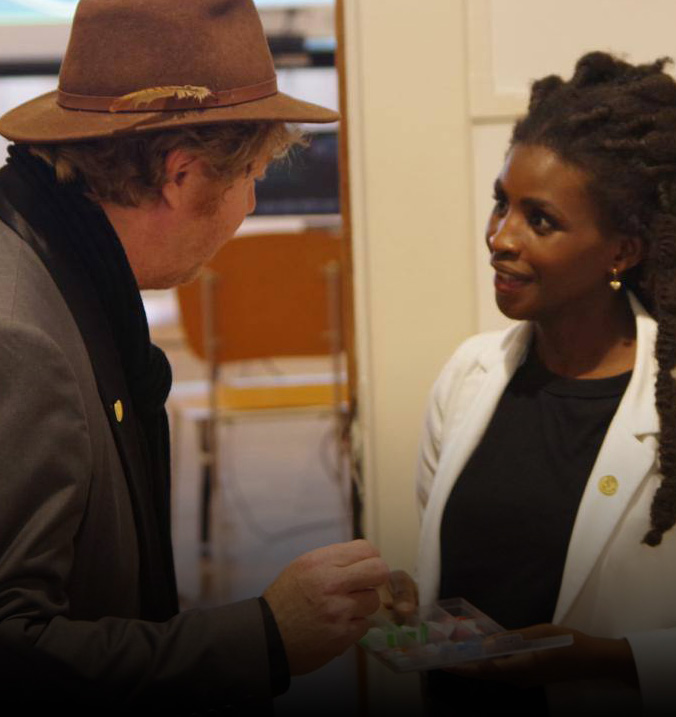
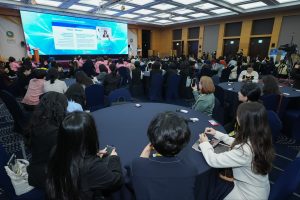
Following the side events, the Global Peace Networking Reception commenced.
After Lee Kyeong-mi, Director of Global Initiatives, introduced IWPG’s core initiatives, participants shared examples of international cooperation.
Shafaq Jaffrey, President of the AusPak Women Association in Australia, presented the organization’s experience co-hosting the preliminary round of the International Loving-Peace Art Competition in Sydney and collaborating on campaigns to raise awareness of violence against women.
Universidad Juárez Autónoma de Tabasco (UJAT) in Mexico shared its experience of establishing a peace committee within the university, introducing a peace lecturer training course, and integrating it into the regular curriculum.
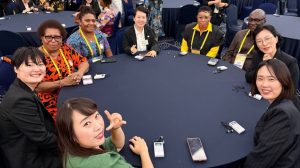
Participants then gathered for continental and regional branch roundtables. Representatives from 31 countries discussed joint projects, the expansion of Peace Leadership Training for Women (PLTE), and strategies for activating peace committees in their respective countries.
Next Story ☞ [IWPC 2026③] From ‘Peace Committee’ to ‘Peace Chapter’: A New Framework for Local Peace Activities
Previous Story ☞ [IWPC 2026①] Peace Drawn by Children, Built by Women Leaders Around the World

Subscribe To Newsletter
We’d love to share everything we do with you. Sign up to stay informed.