[IWPC 2026③] From ‘Peace Committee’ to ‘Peace Chapter’: A New Framework for Local Peace Activities
2026.09.18
On the morning of September 18, two programs were held concurrently, focusing on peace education and local peace initiatives.
🏫 Peace Education Entering the Classroom
The Academic Peace Network Session brought together around 30 participants, including representatives from universities, primary, middle, and high schools, public education officials, and education experts. The session focused on practical applications of Peace Leadership Training for Women (PLTE) and strategies for building networks among educational institutions.
Lee Kyeong-mi, Director of Global Initiatives at IWPG, outlined the current status of PLTE and the challenges involved in applying it within educational settings. She emphasized that moving beyond one-time lectures and integrating PLTE into regular curricula requires subject integration, administrative approval, professional instructor training, and the continued provision of educational materials.
The case of Universidad Juárez Autónoma de Tabasco (UJAT) in Mexico was also introduced. UJAT established an official Peace Committee within the university and, in collaboration with IWPG, has operated PLTE peace instructor training courses. The initiative connects student-led peace programs with university education.
Following the presentations, participants divided into three groups—universities, primary/middle/high schools, and educational institutions and organizations—for roundtable discussions. They exchanged views on developing educational materials tailored to different settings, training faculty and educators, and establishing sustainable models for peace education.
During the discussions, one participant remarked, “Peace education is not about relying on innate character, but a core competency that can be learned.”
🌍 Peace Committee Activities Across Regions
At the same time, the Peace Chapter Workshop brought together 120 to 140 participants, including overseas Branch Managers and Peace Committee executives. The workshop focused on local peace initiatives and future approaches to organizational management.
Karen Elizabeth León Romero of Mexico’s Juntas por la Paz Peace Committee introduced a public interview project asking citizens, “What does peace mean to you?” She also presented an online forum and dance challenge held in connection with International Women’s Peace Day on April 26.
Naranghoo Ganchimeg of Mongolia’s Bayanzurkh Gachuurt Peace Committee shared an initiative that provided relief supplies to nomadic women in outlying areas and conducted peace education reflecting the characteristics of nomadic culture.
Selamawit Reda of the UK’s Manchester Peace Committee presented local initiatives including the International Loving-Peace Art Competition, hate crime prevention sessions held in cooperation with local police and civil society organizations, and the Community Peace Run.
The approaches varied by region. Some engaged the public through interviews and online campaigns, while others provided direct support to residents in remote areas and developed peace education reflecting local circumstances. Other initiatives brought together police and civil society organizations to address community-level issues.
Following the presentations, participants took part in group discussions, sharing field experiences and examining organizational structures and cooperation models needed to sustain local peace initiatives.
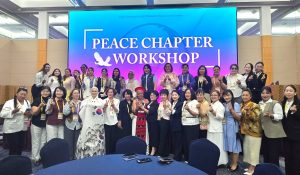
📜 From ‘Peace Committee’ to ‘Peace Chapter’
After the group discussions, Choi Kyoung-nam, Secretary General of IWPG, presented the organization’s direction and future operating structure for existing Peace Committees.
Secretary General Choi announced that Peace Committees, which have operated across various regions for the past decade, would transition to ‘Peace Chapters.’ Under the new structure, Peace Chapters will serve as autonomous local organizations carrying out community-based peace activities, while Peace Committees will be specialized as policy advisory bodies bringing together experts from various fields.
The organizational restructuring separates field activities from policy advisory functions, clarifying and strengthening the respective roles of the two bodies. Following the presentation of the new organizational framework and roles, participants continued discussions on how the changes would be implemented.
Next Story ☞ [IWPC 2026④] Women Leaders from Conflict-Affected Regions Share Their Stories
Previous Story ☞ [IWPC 2026②] Women Leaders Explore Ways to Advance Peace Policies and Global Governance

Subscribe To Newsletter
We’d love to share everything we do with you. Sign up to stay informed.