[IWPC 2026⑤] Discussions on Women’s Leadership and Future Generations Shape Global Women’s Peace Recommendations
2026.09.18
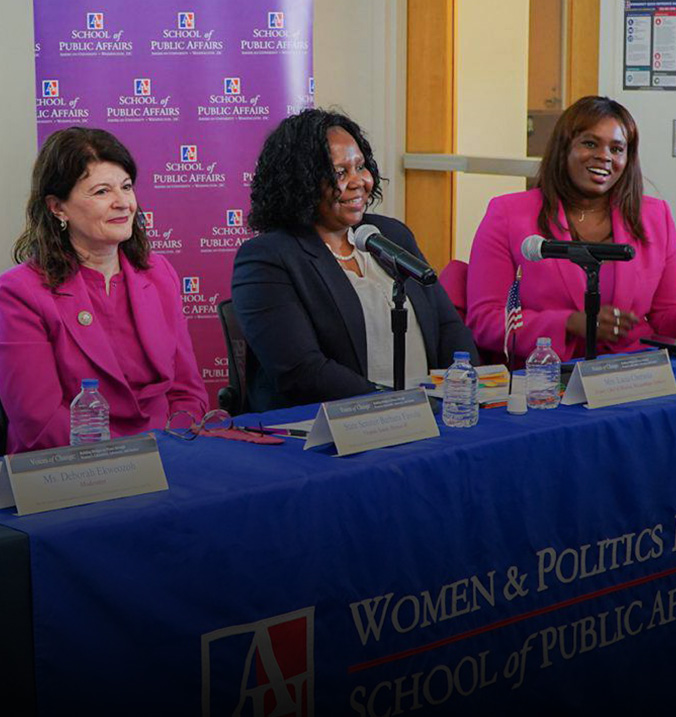
On September 18, the Main Session of the 2026 International Women’s Peace Conference (IWPC) was held in Cheongju.
Following opening remarks by Jeon Na-yeong, President of IWPG, the session featured presentations on women’s leadership and capacity building, everyday peace and conflict transformation, and future generations and global solidarity. Women leaders and experts from around the world shared experiences from their respective fields, covering topics ranging from women’s participation in policymaking and education to post-conflict recovery, child protection, and global citizenship education.
The session concluded with the announcement of the 2026 Global Women’s Peace Recommendations, followed by the signing of Memorandums of Understanding (MOUs) with 12 institutions from eight countries.
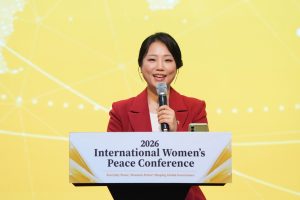
Bringing Women’s Voices to Decision-Making Tables
The first session was held under the theme “Women’s Leadership & Capacity Building.”
Mampurane Caron Kgomo, Deputy Director of Gender and Diversity Management at South Africa’s Department of International Relations and Cooperation (DIRCO), highlighted the legacy of the late Mama Gertrude Shope and introduced her work through the concept of “Cadre for Peace.” She also shared the results of a 10-day Peace Leadership Training and Education (PLTE) program conducted at DIRCO, presenting an example of how education and institutional frameworks can help ensure that women’s voices are reflected in human rights and policymaking processes.
Ing. Diana Caiza, Mayor of Ambato and the first Indigenous woman to serve as mayor of the city, introduced the ancestral Andean principles of “Ayni” (reciprocity) and “Sumak Kawsay” (the Good Life). Her presentation emphasized that women’s leadership should be measured not simply by the number of women represented, but by the concrete institutional and policy changes that follow.
B. Gerel Saraana, Founder and CEO of the BÖRTE Family & Women’s Academy in Mongolia, presented the BÖRTE Model, which brings together family resilience, AI-enabled learning, intergenerational mentorship, and citizen diplomacy. She also proposed using AI technology to expand educational opportunities for women living in remote communities across Mongolia.
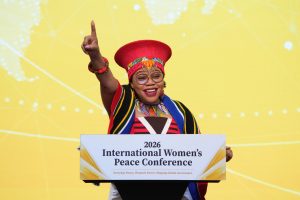
Post-Conflict Recovery and Future Generations
The second session was held under the theme “Everyday Peace: Women’s Actions that Transform Conflict.”
Achiri Constance Amboh, Founder of HAND IN HAND Cameroon and a town planner, shared examples of women contributing to reconciliation and economic stability within their communities. She highlighted the close connection between women’s economic empowerment and their ability to address problems at the local level.
Fawzia Koofi, former Second Deputy Speaker of the Afghan Parliament, discussed post-conflict peace through the lens of her experience participating in peace negotiations with the Taliban. She argued that peace cannot be measured simply by the absence of gunfire and emphasized that security without women’s political and social participation cannot constitute genuine peace. She stressed the importance of ensuring women’s presence at negotiation tables, stating, “Security without participation looks like a graveyard.”
The third session turned to child protection and education under the theme “Future Generations & Global Solidarity.”
Speakers discussed the need for empowered women, responsive governments, and effective partnerships to raise a generation capable of building peace. The session also introduced approaches that link child protection policies with women’s empowerment, highlighting institutional foundations for child protection through examples including Kenya’s Children Act and National Care Reform Strategy.
Dr. Dawn Michele Whitehead, Vice President of the Association of American Colleges and Universities (AAC&U), addressed the role of higher education in building peace. She called for greater collaboration among universities through Global Citizenship Education and the internationalization of curricula, enabling young people to become active participants in building peace rather than simply its beneficiaries.
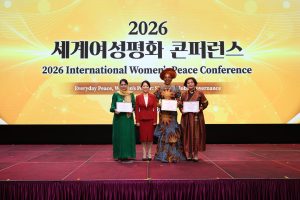
Voices from 1,070 Women in 46 Countries Shaped into Recommendations
In the final part of the afternoon Main Session, Choi Kyoung-nam, Secretary General of IWPG, unveiled the 2026 Global Women’s Peace Recommendations.
The recommendations were developed from insights gathered last July from approximately 1,070 women leaders across 46 countries, together with discussions held throughout the conference.
The recommendations focus on three areas:
1. Ensuring women’s substantive participation and decision-making power in policymaking at the national and international levels.
2. Building institutional safety nets to protect women and children from everyday violence and discrimination, including comprehensive medical, legal, and psychological support.
3. Institutionalizing Peace Leadership Training for Women (PLTE) within public education while expanding region-specific education programs and international cooperation.
IWPG announced plans to present the recommendations as policy guidelines at multilateral diplomatic forums, including the United Nations Commission on the Status of Women (UN CSW) and the African Union (AU).
Following the announcement, IWPG signed MOUs with 12 institutions from eight countries. Public agencies, universities, and civil society organizations—including the Municipality of Ambato in Ecuador—joined IWPG in outlining areas of cooperation for expanding PLTE and implementing regional peace projects.
The Main Session concluded with the presentation of Peace Plaques of Appreciation, the appointment of Advisory Committee members and Publicity Ambassadors, a special cultural performance, and a commemorative photo session.
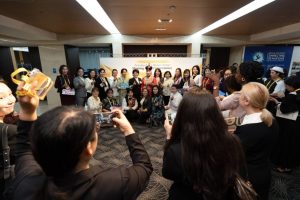
Conversations Continue into the Final Evening
Following the official sessions, a Networking Dinner began at 7 p.m.
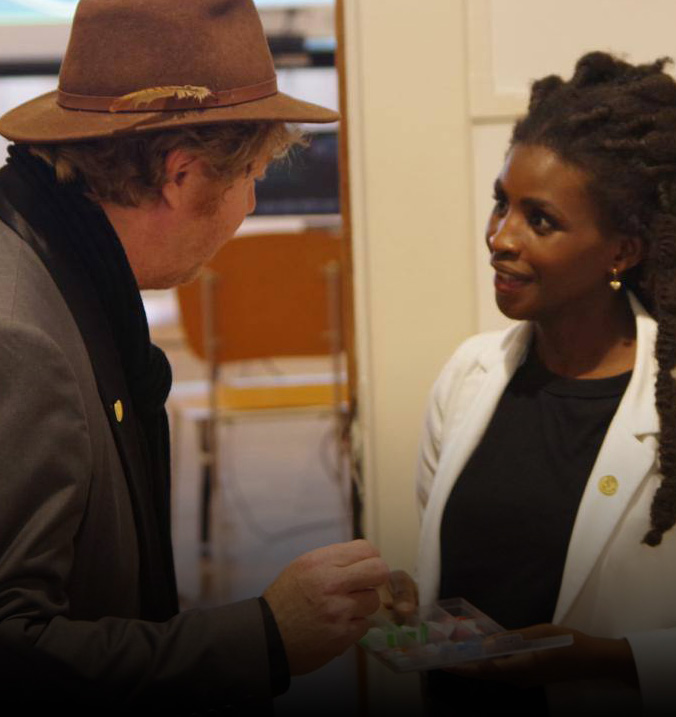
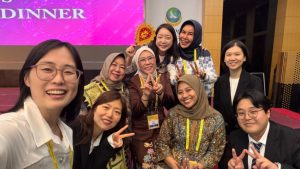
Around 200 international guests and leaders from 31 countries gathered for the final evening of the three-day program. Moderated by Branch Manager Evelina Henriksson, the dinner brought participants together over conversations about regional peace initiatives, PLTE, and the newly announced 2026 Global Women’s Peace Recommendations.
For some participants, the evening offered a chance to meet women leaders they had encountered for the first time during the conference. Others used the opportunity to reconnect with existing partners and discuss potential areas of future cooperation. After a full day of presentations and discussions, conversations continued informally around the tables, focusing on activities in the field and opportunities for collaboration.
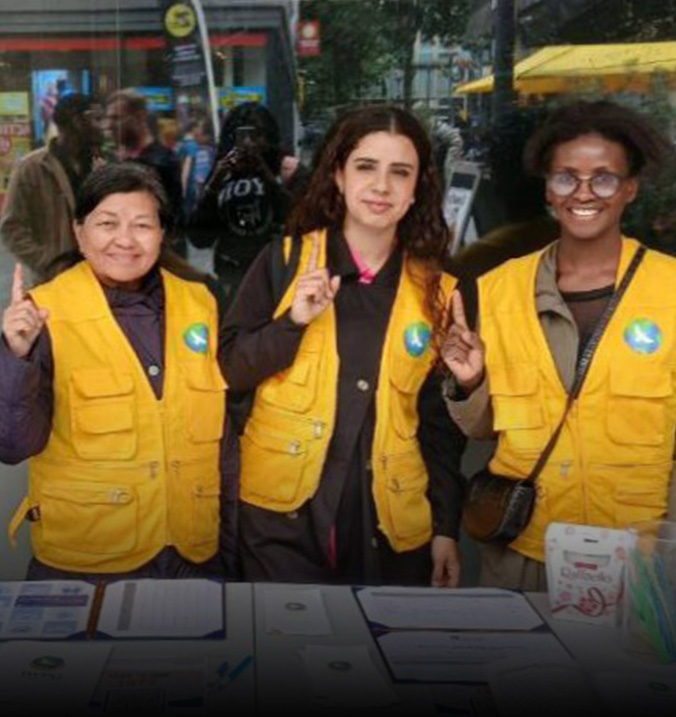
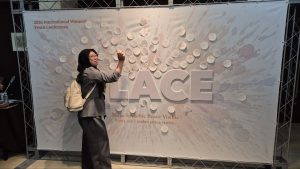
At one side of the venue, the interactive PLACE booth welcomed participants throughout the evening. Guests took part in booth programs, shared personal stories, and captured photos and memories from the conference.
Over three days, discussions moved from women’s participation and peace in everyday life to post-conflict recovery, future generations, and the international solidarity and institutional cooperation needed to support them.
First Story ☞ [IWPC 2026①] Peace Drawn by Children, Built by Women Leaders Around the World
Previous Story ☞ [IWPC 2026④] Women Leaders from Conflict-Affected Regions Share Their Stories

Subscribe To Newsletter
We’d love to share everything we do with you. Sign up to stay informed.